Taurine: The "Key Piece" for Low-Fishmeal Feed
Читать статью на русском


Источник:
sponsored content
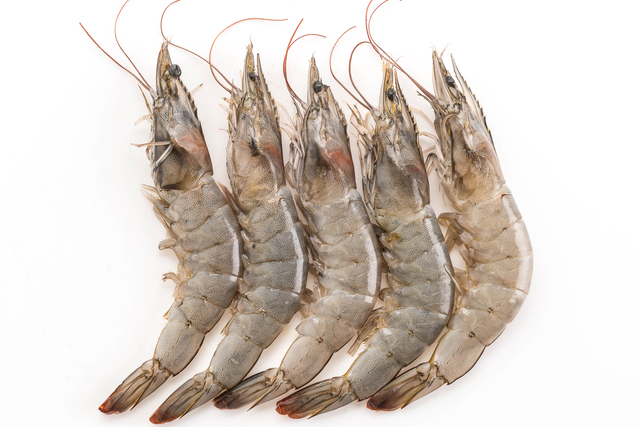
Against the backdrop of a growing supply-demand imbalance and skyrocketing prices of fishmeal, the aquafeed industry is actively seeking alternative solutions like plant-based proteins to address cost challenges. However, simple substitution has led to a series of issues: aquatic animals exhibit slow growth and declining feed efficiency. These problems arising from nutritional imbalances and changes in palatability are becoming hidden bottlenecks for the sustainable development of the industry.
The fundamental reason fishmeal is so difficult to replace completely lies not only in its excellent amino acid profile but also in its richness in a range of bioactive substances with specific physiological functions. Among these, the deficiency of taurine is particularly critical. Research data clearly indicates (Table 1) that compared to fishmeal, common plant-based protein ingredients contain extremely low levels of taurine, almost negligible. This significant nutritional gap is likely a core factor undermining the effectiveness of substitution strategies.
Table 1. Taurine content of animal and other protein sources in feed
|
|
Item |
Taurine content (mg/kg) |
|
Animal protein sources |
Fishmeal |
3201 |
|
Shrimp powder |
1094 |
|
|
Poultry by-product meal |
3079 |
|
|
Poultry meal |
180 |
|
|
Other sources |
Soybean meal |
0 |
|
Soy protein concentrate |
0 |
|
|
Algal meal |
0 |
|
|
Single cell protein |
0 |
Taurine is far from an ordinary amino acid. As a sulfur-containing compound, it performs a range of indispensable physiological functions in animals. These include exerting anti-inflammatory and analgesic effects, regulating cellular osmotic pressure, maintaining retinal health, and ensuring proper nerve signal transmission. Taurine also protects cardiomyocytes, enhances immune function, and boosts the antioxidant defense capacity of cell membranes. In essence, taurine participates in nearly all key pathways essential for sustaining life and health. As research into substituting fishmeal with plant-based proteins deepens, the importance of taurine in aquatic feed has become increasingly prominent.
Therefore, the present study was conducted to evaluate the effects of dietary taurine supplementation in low-fishmeal diets on the growth performance of Litopenaeus vannamei. A total of 960 healthy shrimp were randomly distributed into 24 tanks and fed four experimental diets, with six replicates per group. The control group (FM group)was fed a basal diet containing 29% fishmeal.
The dietary treatments included a low-fishmeal group (LFM group)which involved a 10% replacement of fish meal with single cell protein(protein-rich byproduct of Rhodobacter sphaeroides fermentation, boasts a crude protein content of over 60%)and poultry meal, and two further groups that received this low-fishmeal diet supplemented with 0.3% or 0.6% taurine. The feeding trial lasted for 8 weeks. Taurine, with a purity of 99.9%, was purchased from Zhejiang NHU Company Ltd. As can be seen from Table 2, the cost reduction of 0.5%-1.64% was achieved by using low-fishmeal feed.
Table 2. Dietary formulations and chemical composition of the experimental diets
|
|
FM |
LFM |
LFM +Tau0.3 |
LFM +Tau0.6 |
|
Fishmeal |
29 |
19 |
19 |
19 |
|
Shrimp meal |
6 |
6 |
6 |
6 |
|
Poultry meal |
6 |
11 |
11 |
11 |
|
Single cell Protein |
5 |
5 |
5 |
|
|
Spray-dried porcine hemoglobin powder |
2.5 |
2.5 |
2.5 |
2.5 |
|
Squid paste |
1.5 |
1.5 |
1.5 |
1.5 |
|
Fish solubles |
5 |
5 |
5 |
5 |
|
Ocean-flavored attractant |
1.33 |
1.33 |
1.33 |
1.33 |
|
Yeast hydrolysate |
2.5 |
2.5 |
2.5 |
2.5 |
|
Fermented soybean meal |
4 |
4 |
4 |
4 |
|
Peanut meal |
8 |
8 |
8 |
8 |
|
Soybean meal |
6.87 |
6.87 |
6.87 |
6.87 |
|
Wheat flour |
20.5 |
20.5 |
20.5 |
20.5 |
|
Soybean lecithin oil |
3 |
3 |
3 |
3 |
|
Ca(H₂PO₄)₂ |
1.8 |
1.8 |
1.8 |
1.8 |
|
Shrimp premix |
2 |
2 |
2 |
2 |
|
Taurine |
|
|
0.3 |
0.6 |
|
Chemical composition(%DM) |
|
|
||
|
Crude protein |
45.87 |
46.57 |
46.57 |
46.2 |
|
Crude lipid |
5.33 |
6.3 |
6.02 |
5.92 |
|
Ash |
11.61 |
11.04 |
11.01 |
10.71 |
|
Formulation cost*(RMB/kg) |
9.17 |
9.02 |
9.07 |
9.12 |
* The prices of raw materials are based on the market average.
Compared with the FM group, the LFM group exhibited significantly higher feed conversion ratio and feeding rate (P < 0.05), while final body weight, weight gain rate, and specific growth rate were lower but without significant differences (P > 0.05), and the feed cost per kilogram of gain was increased by 10.81%. However, the inclusion of 0.6% taurine in the LFM group reversed this trend. Compared with the FM group, the LFM group supplemented with 0.6% taurine showed significantly lower feed conversion ratio and feeding rate (P < 0.05), and although final body weight, weight gain rate, and specific growth rate were higher, the differences were not significant (P > 0.05). Furthermore, the feed cost per kilogram of gain was reduced by 11.02%.(As shown in table 3)
This study indicates that reducing fishmeal content had negative effects on the growth performance and feed conversion ratio of shrimp. However, taurine supplementation not only alleviated these negative effects, but also achieved growth performance comparable to the fishmeal group, with a lower feed conversion ratio than the fishmeal group. Based on these results, a dietary taurine supplementation level of 0.6% in low-fishmeal diet (19%).
Table 3. The effects of taurine supplementation of low-fishmeal feed on the growth performance, feed conversion ratio (FCR), and feed cost per kilogram gain (FCG) of Litopenaeus vannamei.
|
|
FM |
LFM |
LFM +Tau0.3 |
LFM +Tau0.6 |
|
Survival(%) |
90 |
90 |
94 |
96 |
|
IBW1 (g) |
1.23±0.09 |
1.23±0.08 |
1.25±0.07 |
1.27±0.05 |
|
FBW2(g) |
8.11±0.27ab |
7.33±0.69ab |
7.15±0.72b |
8.26±0.50a |
|
WGR3(%) |
494.77±44.83ab |
437.77±28.95b |
438.74±35.33b |
525.79±53.99a |
|
SGR4 (%/d) |
3.30±0.14bab |
3.11±0.10b |
3.12±0.12b |
3.39±0.16a |
|
FR5(%BW/d) |
3.98±0.04b |
4.33±0.21a |
4.14±0.22ab |
3.63±0.12c |
|
FCR6 |
1.51±0.05b |
1.71±0.08a |
1.63±0.11ab |
1.35±0.08c |
|
FCG7(RMB/kg gain) |
13.88 |
15.38 |
14.78 |
12.35 |
Notes: Data are expressed as means±SD. Means in the same row with different superscripts are significantly different (P <0.05).
1 IBW=initial body weight/total number of individuals
2 FBW=final body weight/total number of individuals
3
WGR=[(FBW-IBW)/IBW]×100
4 SGR=[(ln FBW -ln IBW)/days]×100
5 FR= total feed intake/(( initial body weight+ final body weight)/2)/days×100
6 FCR= feed intake/weight gain
7 FCG= total feed cost / total weight gain
With the increasing requirements for precise nutrition and sustainable development, NHU taurine will continuously assist the breeding end to achieve the goals of "cost reduction, efficiency increase, green, and safety" from the production end to the application end.
- Теги:
- Регион:


Новости дня